
If you’re holding USDT and need Naira, the rate you get can depend on where you cash out.
Bybit and Textile FX both let you turn USDT into Naira, but they take very different routes. On Bybit, you sell through its P2P marketplace and choose from individual merchants. With Textile FX, the swap happens onchain without handing your funds to a third party.
So which one gives you more Naira for the same amount of USDT?
We checked the numbers using Monierate’s live tracker and a real-time Textile FX quote to see what you would actually get.
How We Checked
For selling USDT for Naira, we used Monierate’s live comparison of both platforms and its snapshot from September 12, 2026, at 6:00 PM GMT+1.
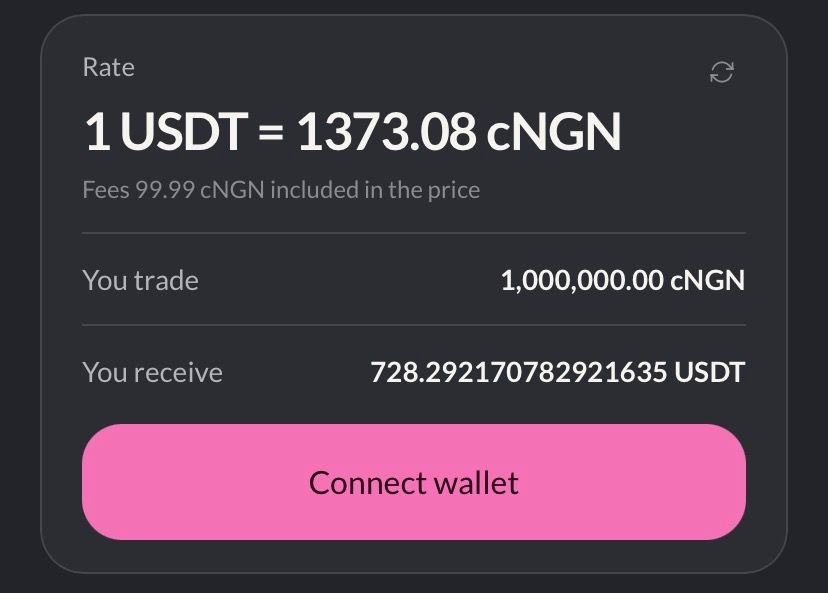
For buying USDT with Naira, we used a live quote pulled directly from the Textile FX app for 1,000,000 cNGN and compared it with Bybit’s published conversion rate at roughly the same time.
The Textile FX figures are quoted in cNGN because that is the Naira-denominated asset used in the onchain swap. cNGN is redeemable for Naira in your account, so for the purpose of comparing the value received by a user, we treat the quoted cNGN amount as the corresponding Naira value, while keeping the distinction between the token and fiat clear.
Rates on both platforms move constantly, so treat this as a snapshot, not a permanent verdict, the live comparison on Monierate updates continuously if you want the current numbers before you trade.
Selling USDT for Naira
| Platform | Rate | You get for 1,000 USDT |
|---|---|---|
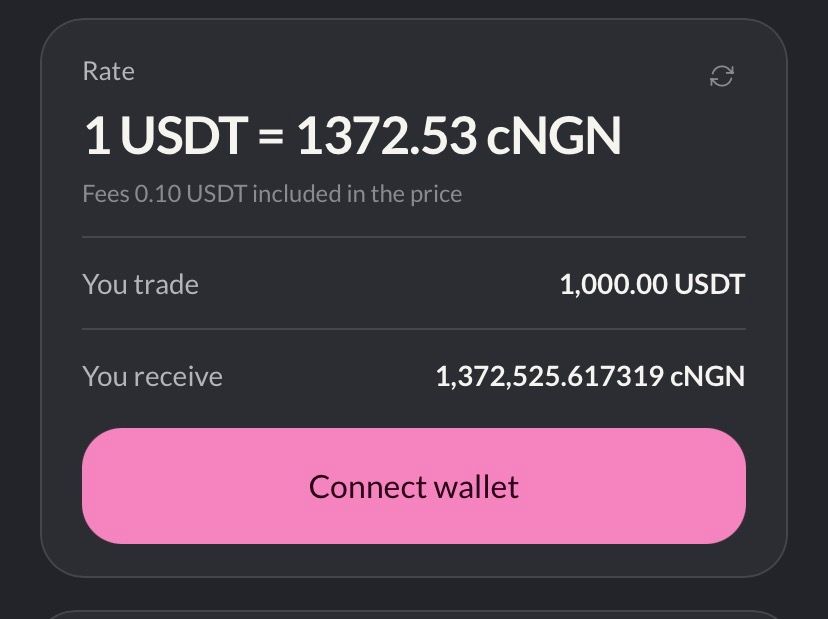
| Textile FX | 1 USDT = 1,372.53 cNGN (Fee included) | 1,372,525.62 cNGN |
| Bybit | 1 USDT = 1,371.32 NGN | 1,371,320.00 NGN |
On this trade, Textile FX gave the higher effective Naira value by ₦1,205.62, or about 0.09%.
The difference is small, but Textile FX came out ahead on the sell side in this snapshot.
Buying USDT with Naira
| Platform | Rate |
|---|---|
| Textile FX | 1 USDT = 1,373.08 cNGN (Fee included) |
| Bybit | 1 USDT = 1,372.49 NGN |
Using ₦1,000,000 as the amount being converted, Bybit’s rate would give you about 0.31 USDT more than the Textile FX rate, a difference of roughly 0.04%.
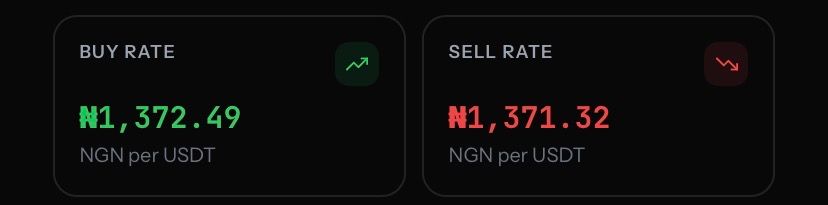
So the result changes depending on which direction you are trading. Textile FX was better for selling USDT in our snapshot, while Bybit was marginally better for buying USDT.
The Hidden Costs Neither Headline Rate Shows
The quoted rate is only part of the cost. What you actually pay can change once you consider the limits, fees, and extra steps behind each option.
With P2P, the price you see may not be the price you end up getting:
- The best-looking offer may only be available for a small amount. If you want to trade more than its limit, you may have to use the next offer, which could have a worse rate.
- The payment method can affect the rate. Bank transfers, cards, and wallets may have different rates even when they appear under the same P2P offer.
- A merchant can cancel, delay the trade, or take longer than expected. If that happens, you have to find another offer, which adds time and inconvenience.
- Bybit’s escrow protects the crypto side of the transaction, but P2P still involves another person and a separate payment rail. A merchant can delay releasing the funds, while a bank can independently flag or delay an incoming transfer.
Onchain swaps are more transparent about their fees, but they have costs of their own:
- Textile FX shows its exchange rate and charges a published 0.01% fee on BNB Smart Chain and Celo before you confirm the swap. The fee does not change based on how much you swap, but you still have to pay network gas fee.
- If you do not already have cNGN, there is an extra step. You first need to acquire or receive cNGN before you can make the swap.
- That step can also have a cost. The platform or exchange you use to acquire cNGN may charge its own fee or give you a less favourable exchange rate. That cost is separate from Textile FX’s 0.01% fee.
So neither option is truly “free.” The difference is in where the cost shows up.
With P2P, the headline rate can look better, but the final outcome can depend on the amount you are trading, the available merchant, the payment method and how long the transaction takes.
With an onchain swap, the platform fee is clear upfront, but you may have to account for network gas and, if you do not already have cNGN, the cost and extra step of getting it first.
Speed & Settlement
Textile FX settles the swap directly onchain. Your cNGN is exchanged for USDT in the same transaction, so there is no separate step where another person has to release your funds. Once the transaction is confirmed, settlement typically happens within seconds.
Bybit P2P works differently. You pay the merchant first, and the merchant confirms the payment before releasing the USDT held in escrow. This can take a few minutes, but it can take longer if the merchant is slow to respond, disputes the payment or becomes unavailable.
Trust, Custody & Risk
Bybit P2P uses escrow to protect the transaction. Bybit holds the USDT while you make payment, and the merchant only receives it after the trade is completed. This reduces the risk of a merchant taking your crypto without completing the transaction, but it does not remove the operational risk of dealing with another person or the bank transfer used for the Naira side.
There is also a separate risk around Nigerian bank transfers. Crypto-related transactions can sometimes lead to bank reviews or account restrictions, regardless of what happens on Bybit.
Textile FX removes the counterparty from the swap itself. You keep control of your wallet, and the transaction is executed through smart contracts onchain. That changes the risk rather than eliminating it.
You still need to use the correct wallet and network and have enough gas to complete the transaction. Sending funds through the wrong network or to an incompatible address can create a problem that an escrow-based P2P transaction generally avoids.
Who Should Use Which?
For someone selling a small amount occasionally, Bybit P2P is probably the easier option. You do not need to set up a separate crypto wallet, and the process is familiar to many users.
For someone who does not have a crypto wallet, Bybit P2P is the simpler starting point. Textile FX requires you to have cNGN in a compatible wallet and understand how the onchain swap works.
For a high-volume trader or business, Textile FX is your go to because its quote and platform fee are visible upfront, and you are not dependent on finding a P2P offer with a large enough limit.
For someone who has experienced bank issues with crypto P2P transactions, Textile FX avoids the specific counterparty-payment structure of P2P because the swap itself happens onchain. It does not eliminate every banking or crypto risk, but it removes that particular part of the process.
Final Verdict
There was no universal winner in our comparison.
When selling 1,000 USDT, Textile FX gave us about ₦1,205.62 more than Bybit, a difference of roughly 0.09%.
When buying USDT with ₦1,000,000, Bybit’s rate gave us about 0.31 USDT more, roughly 0.04%.
That matters because it shows why simply asking “which platform has the better rate?” can be misleading. The answer can change depending on the direction of the trade and the conditions at the exact moment you transact.
FAQ
Is Textile FX cheaper than Bybit P2P?
It depends on the direction and the moment. In our September 12 snapshot, Textile FX gave a better effective rate when selling USDT for Naira, while Bybit was marginally better when buying USDT with Naira. Neither difference was more than about 0.1%.
How long does a cNGN-to-USDT swap take on Textile FX?
The swap is executed atomically in the same onchain transaction, with settlement typically occurring within seconds once the transaction is confirmed.
Is Textile FX safe?
Textile FX is non-custodial, so it does not hold your funds or private keys. The swap is executed through smart contracts onchain. You are still responsible for using the correct wallet and network, keeping your private keys secure and having enough network gas to complete the transaction.
Is Bybit P2P safe?
Bybit uses escrow to hold the crypto side of the trade while the payment is being completed. This helps protect against a merchant taking your crypto without completing the transaction. It does not, however, remove payment-related or banking risks on the Naira side.
Why does Textile FX quote cNGN instead of Naira?
Textile FX uses cNGN, a Naira-denominated stablecoin, for its onchain swap. The cNGN can be redeemed for Naira in your account, allowing users to move between the onchain asset and Naira while retaining a Naira-denominated value throughout the comparison.
